When it comes to my stand against CCM I full well realize I am in the minority. An ever increasing number of American (and foreign) churches use this kind of music. They do so for a variety of reasons and with a variety of justifications. I do not think it is intellectually honest to ignore the other guy's supporting positions in a debate, nor to wave them away as being somehow unimportant. Clearly they are important. They are important enough to have driven thousands and thousands of churches from traditional music to CCM in the last twenty years.
To the best of my ability I have researched those reasons. I have read the few books advocating CCM. I have entered in countless discussions online with people who defend its use. I have read about a zillion blog posts and magazine articles written by various worship leaders, etc. I think I have a decent, if basic understanding of CCM's justifications.
For the next few weeks on this blog I am going to explore those justifications. If you are a proponent of CCM I doubt I will convince you to change back to traditional music. I might, but in all honesty that is not my goal. My goal is to explain to God's people that there are good reasons to maintain a traditional approach to the church service, and that some of those good reasons include the fact that CCM's justifications are largely faulty. So I am going to walk you through those justifications and give my considered perspective on them.
The main and by far the largest justification used for a switch from traditional music to CCM is that music is amoral. In other words, CCM's position is that all styles of instrumental music are morally neutral until lyrics are added to them. For instance, they will assert, "There is no such thing as rock music, only rock lyrics." The logical extension of this is that any kind of musical style must be deemed appropriate for a church service. The only bar, then, is the personal taste of the main demographic group in your service. Ergo, we have found our way to the rationale of a various church service venues based on personal music taste that I have mentioned earlier in this series.
Such a position ignores the established fact that music is an emotional language. You may recall I began this series with an entire blog post dedicated to establishing that as a working definition of music. Some of my opponents were smart enough to recognize immediately how important that definition was and have challenged me on it stridently. They are not right in their challenge but they are right in their realization of the importance of such a definition. Music, alone, apart from lyrics is inherently emotional. It is how feelings sound. Well, are all emotions morally neutral? Some are. Anger is an emotion, for instance. In some contexts it is inappropriate; in others it is appropriate. Pride, on the other hand, while certainly an emotion, is never appropriate. These are only illustrations pointing to the fact. If music alone – without lyrics – conveys emotion and some emotions are sinful for the child of God then some music is sinful too.
In and of itself, however, such an argument as I have just made is relatively weak. I can hear it now. "What? Ok, Mr. Music Big Shot, just exactly what kind of music inspires pride? Huh?" Beats me, so let's move on to something a bit more weighty, shall we? =) Declaring music to be amoral ignores the educated judgment of music experts and serious thinkers going back thousands of years.
At this point I could probably choke you with dozens of quotes, but you can google as well as I can. I will content myself with just a couple. For instance, Plato (who is often misquoted in these debates) clearly expresses his opinion that there are good and bad rhythms entirely apart from lyrics in his Republic. Ancius Boethius, a sixth century philosopher said in his work, Fundamentals of Music, "No path to the mind is as open for instruction as the sense of hearing. Thus, when rhythms and modes reach an intellect through the ears, they doubtless affect and reshape that mind according to their particular character." In other words, various musical styles have an inherent moral character. Indeed, the only historical reference prior to the rise of CCM that says music is amoral I can find anywhere is one relatively obscure nineteenth century German philosopher. On the other hand, quotes about the morality or immorality of various musics abound as far back in recorded history as we can find. Though in and of itself this is not conclusive it should give the CCM proponent pause. Essentially, the amorality of music is a justification largely invented whole cloth by the CCM movement. It is almost entirely new in human history. And that should bother anybody.
But let us not rest upon these two. They are both fairly controversial and their authenticity is vigorously disputed by the CCM apologist. (To be intellectually honest, I can see their disagreement with the first. I cannot for the life of me see their rejection of the second. It is just too proven in the historical record.) Let's move along, for there are other reasons the amorality of music is an inept justification.
 Third, the amorality of music position forces hypocritical judgments. I can only find two entire books defending the use of CCM. One was written by the Presbyterian John Frame. In it, after asserting that music is amoral, he follows it up with this little gem: "This is not to say that every popular music style with Christian words is suitable for worship." This is pure nonsense. Either all music is appropriate or some music is flat out wrong. You cannot maintain that music is amoral and then turn around and say that some of it is inappropriate even after being paired with Christian lyrics. Go ahead, my friend. You loudly proclaim the amorality of musical style. At your next communion observance play some death metal with a Scripture verse thrown in every now and again and then get back to me. But you will not for your cannot. Even in the currently regressed condition of American Christianity they will not go that far. But they should. After all, their position says there is nothing wrong with any style.
However, let us turn from these logical arguments and come back to the Word of God. The idea that music is amoral violates all the accumulated evidence of the deep connection between a beat heavy music and demonic presence. I am not going to wade through that all again, but those of you that are are new to this series will find much to profit from by so doing. I have written thousands of words about it, here, here, here, and again here. If I am right - and please do not take that "if" for anything other than courtesy on my part; I am sure I am right – then to use such music for distinctively Christian purposes is nauseous. This is essentially both the definition of CCM and the main root of my objection to it. I have read too much. I have watched too much. I have seen too much. The connection is blatant and appalling. Shame on God's people, and especially shame on their leaders, for ignoring it.
Lastly, this position ignores clear scriptural example to the contrary. In I Samuel 16 we find some interaction between a still young and relatively unknown David and King Saul. Saul in an agitated state due to demonic oppression finds solace in the simple, flowing, music of David's harp.
But the Spirit of the LORD departed from Saul, and an evil spirit from the LORD troubled him. And Saul’s servants said unto him, Behold now, an evil spirit from God troubleth thee. Let our lord now command thy servants, which are before thee, to seek out a man, who is a cunning player on an harp: and it shall come to pass, when the evil spirit from God is upon thee, that he shall play with his hand, and thou shalt be well. And Saul said unto his servants, Provide me now a man that can play well, and bring him to me. Then answered one of the servants, and said, Behold, I have seen a son of Jesse the Bethlehemite, that is cunning in playing, and a mighty valiant man, and a man of war, and prudent in matters, and a comely person, and the LORD is with him. Wherefore Saul sent messengers unto Jesse, and said, Send me David thy son, which is with the sheep. And Jesse took an ass laden with bread, and a bottle of wine, and a kid, and sent them by David his son unto Saul. And David came to Saul, and stood before him: and he loved him greatly; and he became his armourbearer. And Saul sent to Jesse, saying, Let David, I pray thee, stand before me; for he hath found favour in my sight. And it came to pass, when the evil spirit from God was upon Saul, that David took an harp, and played with his hand: so Saul was refreshed, and was well, and the evil spirit departed from him.
What was present? A demon. What literally drove it away? Instrumental music played in a flowing manner. A whole bunch of you do not like that but it is right there in black and white in your Bible. If all instrumental music is amoral will someone please tell me how come a demon was forced to run away from instrumental music alone?
Inept. Yep. That is the right word, all right. The amorality of music is nothing more than inept justification.
 Whom is your church designed to please? The scriptural answer is, of course, God. But as we were allowed of God to be put in trust with the gospel, even so we speak; not as pleasing men, but God, which trieth our hearts. (I Thessalonians 2.4) The aim of any church is not to please humanity but to please God. Those leading each church should thus seek to mold their church in obedience to the precepts of Scripture for this was precisely what Jesus did. I do always those things that please him. (John 8.29)
Practically speaking, this means my aim as a pastor is to lead our church to be as scriptural and spiritually obedient as possible. My aim is not to have a big church; it is to have a Christ-like church. Would I like our church to grow? Yes, I would, for healthy things are growing things, but our focus is not on growth; it is on health. Growth is simply the by-product of spiritual health.
Contemporary American Christianity largely gets the cart of growth before the horse of obedience. CCM is embraced for precisely this reason. CCM continues – often in an established church over initial opposition – for precisely this reason. CCM is continually re-structured and reinvented for precisely this reason. The pragmatic philosophy underlying all of this is a church that aims itself squarely at the goal of attracting as many people as possible.
In order to do this such churches almost inevitably embrace a marketing approach. Research leads them to a desired demographic. The desired demographic is then studied to determine what they like and what they want in a church. The church staff goes to conferences and reads books and calls in consultants who will teach the church how to give the target demographic what they want.
…and if you cannot see anything wrong with that last paragraph you are a spiritual midget. A church does not have customers. The questions that should be asked are not what do the people want and how can we give it to them? The questions instead must be what does God want and how can we give it to Him?
Some of you reading this are thinking, "Wait just a cotton picking minute, Tom. The independent Baptist movement does that all the time. It promotes and programs and publicizes itself to bigness." I know, and every time it does it weakens itself. I just paid my respects to that in a long chapter in my recent book, Schizophrenic. But as bad as it is in the independent Baptist movement it is exponentially worse in contemporary evangelical Christianity. At least the independent Baptist movement has a love of preaching to serve as a brake on its pell-mell rush into pragmatism. The contemporary movement has no brakes at all that I can see. It was pioneered and built by men like Bill Hybels and Rick Warren with results in mind, and little else. On that it has delivered – results and little else.
 Today's contemporary American church is not driven by a passionate pursuit of holiness, obedience, faith, and the power of God to shine for Him and reach people for Him. No, the contemporary movement is driven by polls, marketing, strategy, laws of attraction, and business sense. Management gurus are studied more than Jeremiah is. Success is no longer measured in terms of obedience to Scripture but in terms of size. The song selection, lighting, invitation, ministry structure, service length, instrument choice, color scheme, service schedule, budget priorities, dress code, sermon topic, audio-visual use, building plan, outreach, counseling, etc. etc. etc. are all pragmatically chosen and market driven with one unifying goal – get a bigger crowd.
Whatever happened to pursuing the power of God? Whatever happened to chasing obedience and letting Him give the increase? Whatever happened to making adherence to Scripture the goal? I will tell you what happened – CCM happened. American Christianity became overly enamored with church size and underwhelmed with scripture, with holiness, obedience, and Christ-likeness. In so doing it birthed and grew the contemporary Christian music industry. And that's a problem.
"Really? Another blog on what's wrong with CCM? Honestly, you just need to move on already."
 No. I am not moving on. Indeed, I plan to camp here for quite a while yet. To mix metaphors entirely, I have been loading my gun for a long time, and since this series may be my only chance to shoot said bullets I aim to fire 'em all. We independent Baptists are fairly good at telling people what to do and what not to do. We are also fairly lousy at explaining why. In a very real sense this blog series is my attempt to address that latter weakness in the area of music. So I plan to keep saying "here's why" for a long time to come.
In point of fact, in my view there are about a dozen good reasons to avoid CCM. Thus far I have indirectly addressed several of them – CCM produces in Christians an incorrect understanding and application of worship, and CCM has a tendency to convert the church service into a show. I have also directly addressed others such as the fact that CCM blurs the clear distinction that ought to divide the church from the world, and that CCM produces stars instead of servants. In today's post I offer you this thought: contemporary music lowers God.
What do I mean by the phrase "lowers God"? I mean that CCM essentially redefines God as being oriented toward us instead of us being oriented toward God. It drains God of His majestic holiness and thus us of an appropriate view of Him. Isaiah famously said, In the year that king Uzziah died I saw also the Lord sitting upon a throne, high and lifted up, and his train filled the temple. (Isaiah 6.1) Philosophically, however, CCM reduces God. It explains Him as essentially existing in order to minister to us, to meet our needs when the scriptural fact of the matter is the exact opposite.
"Hold on a second there, Right Reverend Brennan. You best climb off your high horse. CCM sings more praise to God in a week than you old-fashioned IFB duffers do in a month. For crying out loud, it was exactly for this reason we switched from those tired old hymns and that depressing organ. And it worked. We got the people up, we got their hands in the air, and we are singing praises to our Lord."
Good. No, seriously, good. I am heartily glad CCM sings praise to the Lord. In fact, if it has a strength it is indeed that. It is wonderful about teaching people the importance of telling God He is amazing, and I am not afraid to admit that. Indeed, I love it. Having said that, however, I want you to back up and notice a word I used a paragraph or two up – the word "philosophically". The philosophical foundation on which CCM is built and for which the average church embraces it lowers God. It changes Him; it orients Him to us rather than us to Him.
 For example, take a moment and contrast the approach CCM takes in reaching people with the approach a traditional preaching-heavy church takes. Preaching is specifically designed to directly confront the individual with their hopeless sinfulness in the eyes of a holy God. It tears an arrogant man down brick by brick. It stacks the Word of God up unapologetically beside our rotten lives and demands that we change.
To say the least, CCM is not preaching in this sense; it is art – and art was never made for preaching. Art was made for self-expression. Art was made for beauty. Art was made to produce an inner emotional response to that beauty. In this context CCM seeks to produce in the audience a good feeling. It is specifically designed to make people feel relaxed and comfortable at church. In order to accomplish this it must of necessity go easy on scriptural concepts such as sin, judgment, hell, and condemnation. Contemporary music was not made to confront; it was made to mesh unchurched Harry with the church. As such it presents God as being conveniently approachable. The philosophy of contemporary music is the philosophy of a 24/7 warm welcome. It is Motel 6 and "we'll leave the light on for you." It is not the philosophy of conviction and repentance. It is not the philosophy of a God high, and holy, and lifted up who commands and demands.
The proof of this is revealed in the service structure of the typical contemporary evangelical American church. Take for instance the following quote by John Frame (one of only two men I know who have written a book defending the use of CCM):
These nontraditional forms of worship have displayed some fairly common patterns: more contemporary language and music, informal atmosphere, greater emphasis on joyful celebration, less on mourning over sin. The church seeks to encourage an atmosphere of welcome and friendliness. CW [Frame's preferred term, contemporary worship music or CWM] avoids 'turn-offs' like ancient liturgy, emphasis on denominational history and theological distinctives, ten-minute prayers, forty-minute sermons, uncomfortable seats, ministers' begging for money, and crowded parking lots and restrooms. The preaching assumes little congregational knowledge of Scripture and doctrine, and avoids technical theological language. It begins by addressing 'felt needs.' Sometimes the church uses drama, films, and multi-media, usually to pose questions the sermon seeks to answer...CW is often called 'seeker-sensitive' or 'user-friendly'...
Please do not misunderstand me. I do not for one moment think we ought to be unfriendly or unwelcoming. But if the unsaved sinner does not feel uncomfortable in our church services at some point then what is the point? Contemporary music and its underlying philosophy recoils with horror at that last sentence. In turn, I recoil in horror at its recoiling. If our church services are not confronting the sinner with his sin then what are we converting him from? What are we converting him to? The answer to both those questions is absolutely nothing. He does not feel any pressure. He sees no need to change anything. He experiences no sense of condemnation or shame but rather only one of approval and welcome. In his mind then God feels toward him just like the church service feels to him – it's all good. But God does not want your "come as you are." He wants you to come despising what you are and desperate for His grace to change.
A switch to CCM in a church is much more than a change in musical style. It is the embrace of a philosophy that lowers God and excuses man. And that is a problem.
 It is no secret that the CCM movement has unashamedly copied the world. This is evident in its musical styles, its charts, and its awards. In so doing CCM has also inculcated the secular music industry's tendencies for self-promotion and glorification. In short, CCM has in its DNA a propensity to produce stars instead of servants.
For example, consider the following two examples of actual positive reviews of CCM concerts:
It is no secret that the CCM movement has unashamedly copied the world. This is evident in its musical styles, its charts, and its awards. In so doing CCM has also inculcated the secular music industry's tendencies for self-promotion and glorification. In short, CCM has in its DNA a propensity to produce stars instead of servants.
For example, consider the following two examples of actual positive reviews of CCM concerts:
The thing that the band has going on for them is their fans singing along. Man, were those 13 to 16 year old girls going nuts over Matt and company!
Shrill screams reverberated off the sky-high ceiling. The beginning riff followed by an overwhelmingly loud 'whoa-oh' sent shockwaves through the violently undulating teenage sea. Small groups of girls stood in tight circles clapping like cheerleaders, practically running in place with mouths agape in screams as if the Beatles had just stepped on American soil.
Under the inspiration of the Holy Spirit the Apostle Paul wrote in complete contrast, For we preach not ourselves, but Christ Jesus the Lord; and ourselves your servants for Jesus' sake. (II Corinthians 4.5)
I am as human as the next man. No, I am not a singer or musician but as a preacher who holds a respected position and stands in front of people regularly I know the fight that takes place in my own heart. I want to think the growing crowds in our church show up to hear me. Imagine for a moment how much harder such a temptation becomes to me, as a preacher, if preaching was structured like CCM is structured. Why, surely I might qualify for the Preacher of the Year award. Ok, maybe not that, but at least the Sermon of the Year award. I mean, when I was younger and first breaking into the ministry I should have thrown my name in the ring for the Breakthrough Preacher of the Year award.
For instance, allow me the liberty to re-word an actual CCM CD review that appeared in "Christianity Today". I am just going to insert the equivalent of preaching in lieu of singing.
Tom Brennan deserves high praise for combining multiple interests into a single, cohesive preaching style. His talents are undeniable and promising. Brennan is wildly ambitious, intriguingly varied, and remarkably thought-provoking. He is known for his great opening lines, stunning delivery, amazing production, and enthusiastic storytelling. It seems only fitting that we pay tribute to Tom Brennan, this pivotal Christian preacher.
That does not strike the ear very well, does it? Such a paragraph is clearly not acceptable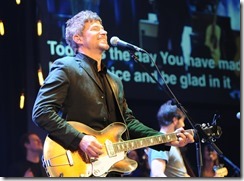 in reference to the man preaching to God’s people. Pray tell me then why it is acceptable for the man singing to God’s people? The simple truth is that while the world is all wrapped up in self-glorification the Christian is supposed to be living a life of self-denial. I am crucified with Christ: nevertheless I live; yet not I, but Christ liveth in me. (Galatians 2.20) Then said Jesus unto his disciples, If any man will come after me, let him deny himself, and take up his cross, and follow me. (Matthew 16.24) CCM's atmosphere thrives in complete contradistinction to these verses.
On the other hand, when you hear a choir sing in a traditional church, or you open up your songbook for a congregational song your attention is first drawn to the song. With CCM your attention is first drawn to the performer himself. There are no star song leaders that I am aware of, but there are lots of star worship leaders and artists and bands, are there not?
Please do not misunderstand me. I do not deny that I have occasionally heard preachers and singers in our kinds of churches whose ministry calls my attention to them first rather than the truth itself. But those are few and far between, and I am pleased to say that there is a growing rejection in the independent Baptist movement of the personality cult of the celebrity pastor. But CCM by its very nature inherently and practically demands it.
 Greatness in the kingdom of God is all wrapped up in being a self-effacing servant. But made himself of no reputation, and took upon him the form of a servant. (Philippians 2.7) In this, as in so many other things, the growing American Christian music industry is moving in the opposite direction from God's kingdom. Which should not surprise anybody. CCM was birthed from and is still nurtured by the world's concept of a music industry. And that is a problem.
Colossians 1.12-13 never mentions music, let alone church music, but it establishes a principle that dramatically impacts church music all the same.
 I am saved. And I should be grateful to the Lord that I am saved for I certainly did not and still do not deserve saving. Giving thanks unto the Father, which hath made us meet to be partakers of the inheritance of the saints in light. (Colossians 1.12) Further, this salvation not only allows me to partake of eternity's glory it also delivers me from the devil's power. Who hath delivered us from the power of darkness. (Colossians 1.13) I am no longer under his curse or in his power; I am free. And here is the reason why: and hath translated us into the kingdom of his dear son. (Colossians 1.13) Salvation ripped me out of the world and enmeshed me into the kingdom of God. Translated in the original language literally means "to move something from one place or sphere to another." As Enoch and Elijah of old, I have been removed from one kingdom – the power of darkness – and placed into another – the kingdom of his dear son. As such, God's people now owe their allegiance to and pledge their fealty to the God of Heaven. One kingdom, and one kingdom only demands their love and loyalty, their affection and devotion – Christ's kingdom.
Will someone please explain to me then why contemporary Christianity for the large part stridently insists on keeping one foot in the world?
The elder apostle said it this way toward the end of his life, Love not the world, neither the things that are in the world. If any man love the world, the love of the Father is not in him. (I John 2.15) I do not have space within the constructs of one blog post to lay out for you a treatise on what the Bible teaches about worldliness. For the moment, suffice it to say that Scripture teaches that the world is a bad thing, and that Christians are to avoid it. In this context the problem inherent in contemporary Christian music's roots and institutional makeup is a desire to chase the world, to be as much like the secular music world as possible.
For example, consider the following, which are are actual reviews of CCM concerts found in the pages of websites and magazines:
The pulsating techno music builds to a deafening crescendo as space-age-sounding zaps punctuate the heavy bass and drum beat. Red and green laser lights etch twisting torsos against blackened walls as coloured glow sticks slice through manufactured fog. Two hundred teens, ages 14-18, have come to dance to cutting-edge house, trance, and jungle music, while light patterns of 'gobos' and 'moonflowers' wash the room in a bright array of colour.
The crowd was stoked and ready to rock as the music started to play and the audience could still only see the silhouettes of the band members behind a pale illuminated curtain. Stuart worked the fans into a frenzy when he left the stage.
 At the first chords, the crowd began pogo-jumping in unison to the crisp guitar, driving rhythm and sweet harmonies. A funky, retro spiral light projector swirled behind the band, accentuating the hipness already fighting the fog machine for control of the room's atmosphere. Owen dedicated the next song 'to the ladies.' The laid-back southern groove brought the crowd back to a head-bobbing frenzy.
Offering the best that 'crunk' rock has to offer, the five-piece masters of fun moved the crowd with their intriguing show, leaving quite an impression. The lead vocalist encouraged the crowd to make some noise as they performed a personalized cover of Nirvana's 'Smells Like Teen Spirit.'
I realize these are reviews of concerts and not church services, but the fact is that as music such as this is promoted and embraced by the wider American Christian world it begins to bleed over into the actual church services themselves. Rick Warren on the platform of his church during a service, in a jocular mood one day, broke into Jimi Hendrix's "Purple Haze" and was immediately backed up by the house band. Hillsong New York recently sent Times Square's The Naked Cowboy out to warm up the crowd for a recent women's meeting. There is a comfort, a union between CCM and the world. Like old friends they are at ease together. For most of contemporary Christianity there is now very little barrier between what is the predominant culture in the world and what the church likes and acts like.
This is driven by CCM's embrace of worldly musical styles, and aggravated by contemporary Christianity's fascination with aping modern movies and television shows for sermon material. The world's entertainment has now become a prime mover in the contemporary American church.
 For a moment, let me address myself to those who read this blog who regularly attend such churches and find nothing wrong with this approach. I want you to ask yourself a question and then answer it honestly. When is the last time you heard a sermon against worldliness? No, rolling your eyes at me does not release you from answering the question, and the fact you rolled your eyes at me proves my point. You have not heard a sermon urging God’s people to beware of and avoid the world since you walked away from the independent Baptist church you grew up in, have you? You left all that "baggage" behind when you found the "grace and liberty" of the contemporary movement. Right. Contemporary Christianity cannot preach against worldliness for the entire culture on which it is built embraces it.
This puts God's people in such churches in both an awkward and a dangerous place. It is awkward because these two kingdoms are diametrically opposed to each other. Like the trick cowboy rider standing on the saddles of two different horses such Christians endure nothing but difficulty. It is dangerous because at some point those horses are going to pull away from each other and the rider while choosing one or the other will probably fall.
Contemporary Christian music drives its churches to embrace the very world from which Christ's salvation translated it away. And that, beloved, is a tragedy.
Why does your church choose the music it chooses? Why does it play and sing it in the style it does? In the last post we saw that the scriptural purpose of church music is edification. But the sad truth is the majority of American churches – what I am going to broadly label as the contemporary movement – do not understand this, and that lack of understanding informs a corresponding errant application in music choice and style. The contemporary movement approaches music differently, and in so doing it directly impacts how they do church music. In today's post I want to discuss two of those errant philosophies.
First, it can reasonably be asserted that the contemporary movement uses music to draw and hold people. In so saying I am not broad-brushing anything nor am I inferring what they themselves have not already implied if not outright stated.
 For example, it is routine for one of the trendy denominations in my city (churches/denominations such as New Life Community Church, Park Community Church, Willow Creek Church, New Life Covenant Church, etc.) to effect what is basically a friendly takeover of an existing independent church. They target churches that are struggling, and offer to come in and restart the church under their brand name. The few remaining folks are folded into the new congregation, the previous pastor is given a generous severance package, and voila, a new "campus" is inaugurated. In the process the trendy denomination convinces the handful of existing people at the new campus that they must change everything in order to attract a crowd. The name must change, the activities must change, the schedule must change, the pastor must change, and most importantly the music must change. After all, it is obvious that the reason your church is in such a sad state is that it is clinging to old-fashioned music that no one likes anymore. If we are going to get this restart off the ground successfully you have to do it our way. And it works. Just look how big we are, and how fast we are growing.
In other words, they introduce music in order to attract, interest, draw, and hold people to a church. The mega-churches do the same thing within their existing church by starting new "venues", services that cater to those who like lite rock or gospel or traditional hymns, et al. This determines which songs are chosen, and the style in which they are performed.
I do not doubt their sincerity. Others might but I do not. I believe they genuinely think that the best way to reach the lost and hold them in church is to offer in a church environment the kind of music unchurched people already enjoy. But their sincerity in no way protects them from the cancerous effect of their musical philosophy. The pragmatism endemic in such an approach produces all manner of worldliness both within the music program itself and throughout the church entire.
The simple truth is there is not a single scriptural example or teaching instructing us to use music as a means of evangelism, or a tool to draw people to a church service. Yes, I understand I Corinthians 9.22 says I am made all things to all men, that I might by all means save some, but the context of that statement has zero to do with music. Paul was contrasting observing aspects of Judaism's ceremonial law vs the freer exercise of the Gentiles. Yes, I realize the Philippian jailer got saved after Paul and Silas sang at midnight, but it was not the music that attracted him to Christ. It was the fear of God put into his heart by the earthquake and his respect for Paul's integrity when he chose not to escape.
God's explicitly chosen means of evangelism is preaching. Preaching is pointed. It is confrontational. It is explanatory. It breeds conviction. Music, on the other hand, especially music tailored to the desires of a lost man, is much more enjoyable than it is convicting. In point of fact, contemporary churches are not aiming at conviction anyway. It is the last thing they want. They are aiming at making the unchurched feel comfortable when they ought to be aiming at the Holy Spirit making him uncomfortable so that he may be converted.
The contemporary movement, however, does not limit its unscriptural philosophy of church music to attraction. It also clearly cultivates an intentional approach of praise and worship toward the Lord. I can hear you already. "Wait. What? Are you saying that worshiping the Lord through the music at church is unscriptural?" No. I am saying that aiming your music at that, developing your music with the purpose of producing worship is unscriptural. It is not sinful. It is just short-sighted.
I do not want to beat a dead horse here but there is a reason I spent six blog posts explaining true biblical worship before I began this series on music. Worship is our response when we see God. But in the New Testament we do not come to church to meet with God. We come to church in order to be edified, to be built up so that we be better prepared to serve God. (Ephesians 4.11-16, I Corinthians 12-14, Ephesians 2.8-10)
 Contemporary churches overwhelmingly use music "to usher people into the presence of God." But that is not the purpose of a church service. In fact, such an approach in actuality severely limits worship, and in the minds of the congregation turns worship into something I feel (remember, music is an emotional language) when the music plays. And along with limiting worship such an approach short circuits the true emotion that is only available to the surrendered Christian and hands it freely, with no commitment needed, to the most carnal of God's people. Worship has become something people feel while the lasers bounce, the fog machine whirrs, the people sway, the drummer pounds away, and the "worship leader" hops up and down while practically swallowing the mic – no matter how far from God the people in the audience were when they walked through the doors that morning. They feel close to God because they feel something. Tada! Music has had its desired effect. Meanwhile, this entire paragraph is a tragic injustice to actual worship, and to the Lord who demands and deserves it.
I ask you again, why does your church choose the music it does? If your answer is not the scriptural one of edification then sooner or later – no matter how sincere you are – your church will experience a variety of spiritually negative consequences. But that's ok. After all, look how big the crowd is today…
That is an interesting question. The answer is even more interesting because your answer reveals the underlying philosophy that builds your church's music program. This philosophy will influence your church's musical direction, and in turn that musical direction will influence your church's corporate culture, its DNA so to speak.  This is because music is a bigger part – timewise – of a church's corporate services than anything other than the preaching. Music takes up more time in a church's weekly schedule than prayer, more time than meetings, more time than discipleship, more time than evangelism, and more time than fellowship. In some churches it event takes up more time than the preaching of the Word of God itself.
There can be no doubt that music is highly influential in the life of the average 21st century American. For example, I once heard Lady Gaga, who has won six Grammys and sold 146 million singles in the last ten years, interviewed. She was asked how she became the way she is. Ironically enough for one whose early albums included the infamous "Born This Way" she said on ABC News May 26, 2011, "Don't spoon-feed me the Beatles and Stevie Wonder and Bruce Springsteen and Pink Floyd and Led Zeppelin and Elton John, and expect for me not to turn out this way." In other words, she is the way she is because of how the music of her past influenced her. That statement could easily and absolutely should be applied to every American generation of young people since the 1950s.
This assertion – that music is highly influential – applies to a church's corporate music as well. No less a guru than Rick Warren said in his bestseller, "The Purpose Driven Church", "Once you have decided on the style of music you're going to use in worship, you have set the direction of your church in far more ways than you realize. It will determine the kind of people you attract, the kind of people you keep, and the kind of people you lose." In other words, a church's music style directly affects everything about what that church is and becomes.
In my view, the reasons a person or an organization does something are more important than the something itself. Somethings change but the underlying philosophy is continual. Reasons are more permanent than actions, and thus are telling. Anybody can see where a person, organization, or church is at. I want to see where it is going. And the foundational reasons why you do what you do reveals that to me.
 Why does my church choose to use and perform the style of music we do? What is our underlying philosophy? Simply this: our philosophical approach to church music can be summed up in one word – edification.
The vast majority of the references in Scripture to music are in the Old Testament. Of the minority remaining in the New Testament only three passages are specifically set in the context of church.
Ephesians 5:19 Speaking to yourselves in psalms and hymns and spiritual songs, singing and making melody in your heart to the Lord;
Colossians 3:16 Let the word of Christ dwell in you richly in all wisdom; teaching and admonishing one another in psalms and hymns and spiritual songs, singing with grace in your hearts to the Lord.
Notice that while this singing is done to the Lord that does not mean it is done primarily for His benefit. Like any other work we do, we should sing in church heartily, as to the Lord and not unto men (Colossians 3.23) in the sense of seeking to please God with our music rather than pleasing men. But these two passages are crystal clear – church music is designed to primarily benefit the people assembled. In corporate music we are speaking to ourselves. We are teaching and admonishing one another.
In plain language then we see that church music was designed to edify the brethren. It was designed to comfort them in distress, to teach them doctrinal truth, to draw their hearts toward God and so build their most holy faith. It was designed to minister to them in need. It was designed to warn them, encourage them, motivate them, etc.
Church music was designed primarily to help build the saints who are singing and/or listening to it. It was not designed primarily to help the preacher. It was not designed primarily to minister to God. It was not designed primarily to reach the lost.
Music is an emotional language. Because of this it is vital that church music be understandable. The third direct New Testament reference to music in the local church is I Corinthians 14. What is it then? I will pray with the spirit, and I will pray with the understanding also: I will sing with the spirit, and I will sing with the understanding also. (I Corinthians 14.15) If the music in a church service was for God it would not matter what language it was in; He understands them all. But it is not. Music in a church service was designed primarily to edify the saints assembled. How is it then, brethren? when ye come together, every one of you hath a psalm, hath a doctrine, hath a tongue, hath a revelation, hath an interpretation. Let all things be done unto edifying. (I Corinthians 14.26) It only edifies me if I can understand it. Thus we see why it is corporate music must be understandable - because its purpose is edification of the brethren.
You say, "Okay, but why does it matter?" Because when your intentional purpose for church music is different than the above explanation it begins to take your music in some bad directions. Over time, given enough rope, an incorrect philosophy of church music will breed incorrect applications of church music. This, in turn, becomes hardwired into the church's DNA and errors then abound everywhere.
Contemporary American Christianity has taken music in some strange directions. Not coincidentally, they have taken the whole concept of church and perhaps even the whole concept of Christianity in some strange directions. A major part of the reason why is that it completely misunderstands the purpose that music plays in a church service. A wrong philosophy has errantly built an entire movement.
The truth is that our music in church was designed by God to edify His people. Any other approach is simply unscriptural.
Fourteen years ago the Lord began to work on my heart about leaving the church I had begun in rural Pennsylvania. I was not frustrated with my people or my work, but I was frustrated with our church's location. After two different churches contacted me unsolicited asking me to consider candidating I sought counsel from some older pastors. Following their advice, I began to pray that the Lord would send me to an area with more people. I asked God to keep it east of the Mississippi River so that we might be within driving distance of our families.
 Thirteen years ago I picked up the phone one September day and for the first time I heard a voice say, "This is Bob Heath in Chicago." He was 68 years old, and had been at his church for 23 years. A recent severe disappointment in the church combined with a ministry no longer in its heyday forced him to ask some hard questions. The answers included a transition into a different kind of ministry for himself, and a phone call to me.
Thus began a relationship between him and me that was unique to us both. I pastored the church to which he and Nancy had given their best years, decades of their life. He loved these people and this work in a way that is impossible to explain to anyone who has not been a pastor. Such a love is a curious combination of a mother to a child, a groom to a bride, and an entrepreneur to his dream. Now he had stepped aside and another had assumed his place. In turn, I sat in his office, counseled his people, preached in his pulpit, and lived in his house. Only now all of those things were (temporarily) mine. In choosing which things to leave alone, which to adjust, and which to expand I passed judgment on 23 years of his life. I was powerless to go back in time and change anything. He simply had to trust the Lord that I would build on his life's work and not tear it down.
I respected him from the moment I met him. His carriage and service here brought it out in me instinctively. Through these thirteen years that respect only grew. You see, there were only two men alive who understood all that it meant to pastor an independent Baptist church on this corner of this great American inner city – Bob Heath and myself. Through the years I gradually came to the deepening conclusion that what he and Nancy accomplished here was nothing short of amazing.
At his passing many family members spoke of his love for them, and many ex-members spoke of his ministry to them. But only one man can speak of his pastoring with any deep knowledge. That man is me. And I want you to see the Bob Heath I see because my view of this amazing man is totally unique.
When Pastor Heath arrived at Maplewood in 1981 the church was probably at its lowest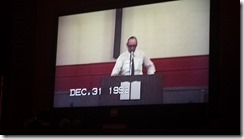 point in its history. Spiritually, it resembled a bunch of inbred cats fighting vigorously in the monthly business meetings over whether to purchase a new vacuum cleaner or not. Disproportionately elderly and white in a neighborhood that was neither, it unknowingly faced demographic oblivion. He told me one time that a dozen of these "saints" voted against him in every business meeting for years no matter what it was that he was proposing. In his 23 years he buried nine of them leaving me to only have to deal with the three remaining. Bickering, fussing, cliquish, white, resistant to pastoral leadership, used to running pastors off in fact – they ran into a buzz saw when they ran into Bob Heath. Only two men in this church's 125 year old history have pastored it longer than five years – him and me. And I would not have been called here if he had not already been here first.
I have pastored 19 years. I have scores of pastor friends. My father was a pastor for 38 years. It is incredibly difficult to change the culture of a church, and to do so without splitting it or killing it. He did. When he came it was allied with Moody Church. He led it to be loosely aligned with Hyles-Anderson College. When he came they had zero concept of personal evangelism. He developed them into a vigorous soul winning institution. When he came the church was debilitated with mutual indecision. He transitioned them to follow him. When he came the church had no outreach. He pushed and prodded and shamed and drove them into running so many buses and bringing in so many children there was not room enough for either. Somehow, he took a fossilized, hidebound, feuding declining church and turned it into a thriving evangelistic machine.
It is well worth noting that he did all of this in the middle of a great American city. We are not in a suburb; we are smack in the middle of working class Chicago. Within one mile of our church building there at least 150,000 people, including thousands of gang members, tens of thousands of undocumented immigrants, and a socially and politically liberal culture that is both deep and wide. Independent Baptists fled American inner cities in the 1970s with the vigor of a man being chased by a Siberian tiger. Their lily white congregations sold out and ran for the supposed haven of the suburbs leaving the decaying inner city to spiritually rot. To their everlasting credit, that generation of Maplewood's members did not. To Bro. Heath's everlasting credit he worked it with everything he had until he made it work. Today our church is an incredible exception to a rather nasty rule – we are a conservative, traditional, ancient inner city church of clear denominational affiliation that is growing. In fact, our church's biggest problem at the moment is space, the lack of it I mean. None of that would be remotely true without Bob Heath.
Along the way, he dealt prudently with the finances. He expanded the footprint of our building by adding a foyer and two offices. He led the church to purchase an unattached parking lot a block away. When he handed me the keys he also handed me a healthy bank statement, two buses, three vans, six city lots, a church building, a parsonage, and zero debt. I cannot possibly express how helpful that is to the succeeding pastor.
Week after week, month after month, season after season, year after year, he shoveled the snow, scrubbed off the graffiti, repaired the vehicles, dealt with the city, counseled the troubled, handled the crises, cast the vision, motivated the workers, preached the sermons, and in the face of opposition within and without led this church forward for the cause of Christ. And he did all of this without the hint of a breath of scandal. He was compassionate. He was firm. He was consistent. He was sacrificial. He was aggressive. And he was right.
 How do you measure a man's life? Surely part of that measurement must include his work. And from the perspective of the man who knows that work better than any other man living I measure it as a grand life. Two thousand years ago our Saviour said, Except a corn of wheat fall into the ground and die, it abideth alone: but if it die, it bringeth forth much fruit. (John 12.24) On April 9, 2016 Bob Heath died, and went to his reward. But the truth is that Bob Heath died many years ago. He died to himself, and his lifelong dreams and ambitions. He died to leisure, good living, and the peaceful pace of his Southern rural upbringing. Instead, he gave his life away. And in the process he rescued, nay, practically resurrected an evangelistic independent Baptist church in one of America's great inner cities. And it bringeth forth much fruit.
On behalf of the past, present, and future members of Maplewood Bible Baptist Church in Chicago I thank Bob and Nancy Heath for their decades of ministry among us. At the risk of a premature announcement I feel absolutely confident in asserting that he heard his Heavenly Father say, Well done, thou good and faithful servant. (Matthew 25.21)

The average American listens to hundreds of hours of music a year often with little more rationale for his choice than "I like it." Music is an emotional language and highly influential in our lives. Thus it behooves us to choose our music with much greater care than just the shallow reasoning of "I like it." Last week we examined three tests our personal music should pass before we allow it into our lives. Today I want to give you three additional thoughts to consider in this context.
First (or fourth, if you are following along from last week), might this music cause my brother to stumble? Wherefore, if meat make my brother to offend, I will eat no flesh while the world standeth, lest I make my brother to offend. (I Corinthians 8.13) I do not mean "offend" as in bother. If my music bothers you or your music bothers me – ruining my concentration, aggravating my peace and quiet, etc. – that does not mean this test has been failed. I mean "offend" as in causing another person's spiritual walk to be negatively affected.
Leadership is influence, and the more influence the Lord has allowed you to have over other people the more important it is that you abide by this. Let's take folk music for a brief example. There is a point at which folk slides into the beginnings of country. On the other edge country melds into rock, and on all sides it long ago edged into glorifications of alcohol and adultery. If I listen to folk music, and discuss it publicly in a positive manner it just may provoke in one who follows me a much poorer choice simply because they possess little discernment.
I am not saying that your life has to be held hostage by the immaturity of others. I am saying that you and I need to think about every influence we allow in our lives – not just from the standpoint of "Is this acceptable?" but also from the standpoint of "Will this influence a weaker brother to make a bad decision."
Along this line I confess I am mystified at what God's people will "like" with a Facebook button, especially God's people in positions of leadership. I am not advocating hypocrisy and a double life. I am however advocating that we think through what we praise or what we express affection for. It just may be that what some of us can sense in the way of spiritual boundaries others cannot see at all. If that's the case we are wise to avoid any actions or commendations or expressions that may spiritually damage a weaker brother's spiritual walk.
I can hear it now… "But, Pastor Brennan, I have Christian liberty!"
This is not about liberty; it is about discernment and influence. It is about putting another person's needs above my own preferences. It is about being conscious of their condition rather than my rights.
Second, is this music a weight holding me back from running my best race? Wherefore seeing we also are compassed about with so great a cloud of witnesses, let us lay aside every weight, and the sin which doth so easily beset us, and let us run with patience the race that is set before us. (Hebrews 12.1) Sin and weight are two different things. The former is the transgression of God's law. The latter is anything else that would otherwise be acceptable if it will hold me back from running a good race.
Bro. Hyles used to often use an illustration in this context of a footrace. Is it a sin to show up for a footrace in an overcoat and combat boots? No. But it would be a clear hindrance. The weight and encumbrance are unnecessary and actually detrimental.
The applications of this principle go far beyond my personal taste in music but they certainly apply there as well as elsewhere. For example, being a father is one of the great privileges of my life. …and talk about a race that needs run with patience, huh? I would be foolish to foster musical tastes that made my parenting job more difficult, that developed unhealthy appetites in my children, or that distracted me from my responsibility to bring my children up in the nurture and admonition of the Lord.
Lastly, is my choice in music excellent? "Well, duh, she won a Grammy." Um, no, you have missed my point. Paul expressed a fervent desire that the Philippian church would approve things that are excellent. (Philippians 1.10) Grammy's and Emmy's and Oscar's are the world's standard of excellence. God's standards are entirely different. My mother used to quote the little ditty
Good, better, best; Never let it rest
Till your good is better, And your better's best
Daniel is a superlative example of this. Then this Daniel was preferred above the presidents and princes, because an excellent spirit was in him. (Daniel 6.3) It was not a question of a bad spirit; it was a question of differing grades of good spirit. Daniel's was not merely good. It was not even better. Daniel's spirit was downright excellent.
It is precisely at this point that we find the great error with the question that is so often hurled in musical debates, "Well, what's wrong with such-and-such a song or an artist like so-and-so? Huh? Just prove to me what is so wrong about them!" The question itself – while logically valid and almost always worth an answer for reasons of teaching and understanding – reveals an awful philosophical approach to choosing music. It assumes not just neutrality, but actual moral goodness on the part of the music in question. It assumes innocence, and then demands guilt be proven before a negative verdict can be rendered.
The problem is not with your right to ask such a question. The problem is that it essentially reduces to a minimum what is necessary to deem a song or an artist or a genre acceptable and then marches off into the sunset proclaiming victory. The Holy Spirit inspired Word of God explicitly calls for us not to be satisfied with the minimum, to skate by the edge as long as we stay within the lines. He calls for us to trade in our fleshly minimums for His maximums.
Excellent musical choices will never be arrived at by asking, "What's wrong with this?" They can only be arrived at by asking, "What's right with this?" Instead of demanding that someone show you the error of music seek to actively establish its spiritual health. Does this music make me want to be a better person? Does it increase my capacity to feel and express genuine love? Does it teach me something excellent? Does it create an excellent spirit in me? Does it draw people together? Does it bring comfort? Does it lend strength? Does it provoke me to good works? Does it cause my heart to well up in praise? Etc. etc.
I realize all six of these suggestions I have offered you over the last two weeks are subjective. But that's ok. The independent Baptist movement could do with a few less musical guru's approving everything for everyone. I am convinced that if you will actively seek to live by biblical principle under the guidance of the Holy Spirit He will lead you to choose correctly when it comes to music.
…but above all, take your personal music choices seriously. Throw out once and for all the simplistic and dangerous "I like it." Put your music to a sterner test than that.
Paul said it this say, Prove all things. Test absolutely everything. Assume nothing. And then, once you have painstakingly established your music's spiritual health, hold fast to that which is good. (I Thessalonians 5.21)


 CCM is that music is amoral. In other words, CCM's position is that all styles of instrumental music are morally neutral until lyrics are added to them. For instance, they will assert, "There is no such thing as rock music, only rock lyrics." The logical extension of this is that any kind of musical style must be deemed appropriate for a church service. The only bar, then, is the personal taste of the main demographic group in your service. Ergo, we have found our way to the rationale of a various church service venues based on personal music taste that I have mentioned earlier in this series.
  Third, the amorality of music position forces hypocritical judgments. I can only find two entire books defending the use of CCM. One was written by the Presbyterian John Frame. In it, after asserting that music is amoral, he follows it up with this little gem: "This is not to say that every popular music style with Christian words is suitable for worship." This is pure nonsense. Either all music is appropriate or some music is flat out wrong. You cannot maintain that music is amoral and then turn around and say that some of it is inappropriate even after being paired with Christian lyrics. Go ahead, my friend. You loudly proclaim the amorality of musical style. At your next communion observance play some death metal with a Scripture verse thrown in every now and again and then get back to me. But you will not for your cannot. Even in the currently regressed condition of American Christianity they will not go that far. But they should. After all, their position says there is nothing wrong with any style.
  a comely person, and the LORD is with him. Wherefore Saul sent messengers unto Jesse, and said, Send me David thy son, which is with the sheep. And Jesse took an ass laden with bread, and a bottle of wine, and a kid, and sent them by David his son unto Saul. And David came to Saul, and stood before him: and he loved him greatly; and he became his armourbearer. And Saul sent to Jesse, saying, Let David, I pray thee, stand before me; for he hath found favour in my sight. And it came to pass, when the evil spirit from God was upon Saul, that David took an harp, and played with his hand: so Saul was refreshed, and was well, and the evil spirit departed from him.


