That is an interesting question. The answer is even more interesting because your answer reveals the underlying philosophy that builds your church's music program. This philosophy will influence your church's musical direction, and in turn that musical direction will influence your church's corporate culture, its DNA so to speak.  This is because music is a bigger part – timewise – of a church's corporate services than anything other than the preaching. Music takes up more time in a church's weekly schedule than prayer, more time than meetings, more time than discipleship, more time than evangelism, and more time than fellowship. In some churches it event takes up more time than the preaching of the Word of God itself.
There can be no doubt that music is highly influential in the life of the average 21st century American. For example, I once heard Lady Gaga, who has won six Grammys and sold 146 million singles in the last ten years, interviewed. She was asked how she became the way she is. Ironically enough for one whose early albums included the infamous "Born This Way" she said on ABC News May 26, 2011, "Don't spoon-feed me the Beatles and Stevie Wonder and Bruce Springsteen and Pink Floyd and Led Zeppelin and Elton John, and expect for me not to turn out this way." In other words, she is the way she is because of how the music of her past influenced her. That statement could easily and absolutely should be applied to every American generation of young people since the 1950s.
This assertion – that music is highly influential – applies to a church's corporate music as well. No less a guru than Rick Warren said in his bestseller, "The Purpose Driven Church", "Once you have decided on the style of music you're going to use in worship, you have set the direction of your church in far more ways than you realize. It will determine the kind of people you attract, the kind of people you keep, and the kind of people you lose." In other words, a church's music style directly affects everything about what that church is and becomes.
In my view, the reasons a person or an organization does something are more important than the something itself. Somethings change but the underlying philosophy is continual. Reasons are more permanent than actions, and thus are telling. Anybody can see where a person, organization, or church is at. I want to see where it is going. And the foundational reasons why you do what you do reveals that to me.
 Why does my church choose to use and perform the style of music we do? What is our underlying philosophy? Simply this: our philosophical approach to church music can be summed up in one word – edification.
The vast majority of the references in Scripture to music are in the Old Testament. Of the minority remaining in the New Testament only three passages are specifically set in the context of church.
Ephesians 5:19 Speaking to yourselves in psalms and hymns and spiritual songs, singing and making melody in your heart to the Lord;
Colossians 3:16 Let the word of Christ dwell in you richly in all wisdom; teaching and admonishing one another in psalms and hymns and spiritual songs, singing with grace in your hearts to the Lord.
Notice that while this singing is done to the Lord that does not mean it is done primarily for His benefit. Like any other work we do, we should sing in church heartily, as to the Lord and not unto men (Colossians 3.23) in the sense of seeking to please God with our music rather than pleasing men. But these two passages are crystal clear – church music is designed to primarily benefit the people assembled. In corporate music we are speaking to ourselves. We are teaching and admonishing one another.
In plain language then we see that church music was designed to edify the brethren. It was designed to comfort them in distress, to teach them doctrinal truth, to draw their hearts toward God and so build their most holy faith. It was designed to minister to them in need. It was designed to warn them, encourage them, motivate them, etc.
Church music was designed primarily to help build the saints who are singing and/or listening to it. It was not designed primarily to help the preacher. It was not designed primarily to minister to God. It was not designed primarily to reach the lost.
Music is an emotional language. Because of this it is vital that church music be understandable. The third direct New Testament reference to music in the local church is I Corinthians 14. What is it then? I will pray with the spirit, and I will pray with the understanding also: I will sing with the spirit, and I will sing with the understanding also. (I Corinthians 14.15) If the music in a church service was for God it would not matter what language it was in; He understands them all. But it is not. Music in a church service was designed primarily to edify the saints assembled. How is it then, brethren? when ye come together, every one of you hath a psalm, hath a doctrine, hath a tongue, hath a revelation, hath an interpretation. Let all things be done unto edifying. (I Corinthians 14.26) It only edifies me if I can understand it. Thus we see why it is corporate music must be understandable - because its purpose is edification of the brethren.
You say, "Okay, but why does it matter?" Because when your intentional purpose for church music is different than the above explanation it begins to take your music in some bad directions. Over time, given enough rope, an incorrect philosophy of church music will breed incorrect applications of church music. This, in turn, becomes hardwired into the church's DNA and errors then abound everywhere.
Contemporary American Christianity has taken music in some strange directions. Not coincidentally, they have taken the whole concept of church and perhaps even the whole concept of Christianity in some strange directions. A major part of the reason why is that it completely misunderstands the purpose that music plays in a church service. A wrong philosophy has errantly built an entire movement.
The truth is that our music in church was designed by God to edify His people. Any other approach is simply unscriptural.
Fourteen years ago the Lord began to work on my heart about leaving the church I had begun in rural Pennsylvania. I was not frustrated with my people or my work, but I was frustrated with our church's location. After two different churches contacted me unsolicited asking me to consider candidating I sought counsel from some older pastors. Following their advice, I began to pray that the Lord would send me to an area with more people. I asked God to keep it east of the Mississippi River so that we might be within driving distance of our families.
 Thirteen years ago I picked up the phone one September day and for the first time I heard a voice say, "This is Bob Heath in Chicago." He was 68 years old, and had been at his church for 23 years. A recent severe disappointment in the church combined with a ministry no longer in its heyday forced him to ask some hard questions. The answers included a transition into a different kind of ministry for himself, and a phone call to me.
Thus began a relationship between him and me that was unique to us both. I pastored the church to which he and Nancy had given their best years, decades of their life. He loved these people and this work in a way that is impossible to explain to anyone who has not been a pastor. Such a love is a curious combination of a mother to a child, a groom to a bride, and an entrepreneur to his dream. Now he had stepped aside and another had assumed his place. In turn, I sat in his office, counseled his people, preached in his pulpit, and lived in his house. Only now all of those things were (temporarily) mine. In choosing which things to leave alone, which to adjust, and which to expand I passed judgment on 23 years of his life. I was powerless to go back in time and change anything. He simply had to trust the Lord that I would build on his life's work and not tear it down.
I respected him from the moment I met him. His carriage and service here brought it out in me instinctively. Through these thirteen years that respect only grew. You see, there were only two men alive who understood all that it meant to pastor an independent Baptist church on this corner of this great American inner city – Bob Heath and myself. Through the years I gradually came to the deepening conclusion that what he and Nancy accomplished here was nothing short of amazing.
At his passing many family members spoke of his love for them, and many ex-members spoke of his ministry to them. But only one man can speak of his pastoring with any deep knowledge. That man is me. And I want you to see the Bob Heath I see because my view of this amazing man is totally unique.
When Pastor Heath arrived at Maplewood in 1981 the church was probably at its lowest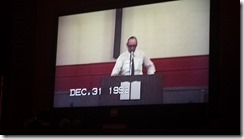 point in its history. Spiritually, it resembled a bunch of inbred cats fighting vigorously in the monthly business meetings over whether to purchase a new vacuum cleaner or not. Disproportionately elderly and white in a neighborhood that was neither, it unknowingly faced demographic oblivion. He told me one time that a dozen of these "saints" voted against him in every business meeting for years no matter what it was that he was proposing. In his 23 years he buried nine of them leaving me to only have to deal with the three remaining. Bickering, fussing, cliquish, white, resistant to pastoral leadership, used to running pastors off in fact – they ran into a buzz saw when they ran into Bob Heath. Only two men in this church's 125 year old history have pastored it longer than five years – him and me. And I would not have been called here if he had not already been here first.
I have pastored 19 years. I have scores of pastor friends. My father was a pastor for 38 years. It is incredibly difficult to change the culture of a church, and to do so without splitting it or killing it. He did. When he came it was allied with Moody Church. He led it to be loosely aligned with Hyles-Anderson College. When he came they had zero concept of personal evangelism. He developed them into a vigorous soul winning institution. When he came the church was debilitated with mutual indecision. He transitioned them to follow him. When he came the church had no outreach. He pushed and prodded and shamed and drove them into running so many buses and bringing in so many children there was not room enough for either. Somehow, he took a fossilized, hidebound, feuding declining church and turned it into a thriving evangelistic machine.
It is well worth noting that he did all of this in the middle of a great American city. We are not in a suburb; we are smack in the middle of working class Chicago. Within one mile of our church building there at least 150,000 people, including thousands of gang members, tens of thousands of undocumented immigrants, and a socially and politically liberal culture that is both deep and wide. Independent Baptists fled American inner cities in the 1970s with the vigor of a man being chased by a Siberian tiger. Their lily white congregations sold out and ran for the supposed haven of the suburbs leaving the decaying inner city to spiritually rot. To their everlasting credit, that generation of Maplewood's members did not. To Bro. Heath's everlasting credit he worked it with everything he had until he made it work. Today our church is an incredible exception to a rather nasty rule – we are a conservative, traditional, ancient inner city church of clear denominational affiliation that is growing. In fact, our church's biggest problem at the moment is space, the lack of it I mean. None of that would be remotely true without Bob Heath.
Along the way, he dealt prudently with the finances. He expanded the footprint of our building by adding a foyer and two offices. He led the church to purchase an unattached parking lot a block away. When he handed me the keys he also handed me a healthy bank statement, two buses, three vans, six city lots, a church building, a parsonage, and zero debt. I cannot possibly express how helpful that is to the succeeding pastor.
Week after week, month after month, season after season, year after year, he shoveled the snow, scrubbed off the graffiti, repaired the vehicles, dealt with the city, counseled the troubled, handled the crises, cast the vision, motivated the workers, preached the sermons, and in the face of opposition within and without led this church forward for the cause of Christ. And he did all of this without the hint of a breath of scandal. He was compassionate. He was firm. He was consistent. He was sacrificial. He was aggressive. And he was right.
 How do you measure a man's life? Surely part of that measurement must include his work. And from the perspective of the man who knows that work better than any other man living I measure it as a grand life. Two thousand years ago our Saviour said, Except a corn of wheat fall into the ground and die, it abideth alone: but if it die, it bringeth forth much fruit. (John 12.24) On April 9, 2016 Bob Heath died, and went to his reward. But the truth is that Bob Heath died many years ago. He died to himself, and his lifelong dreams and ambitions. He died to leisure, good living, and the peaceful pace of his Southern rural upbringing. Instead, he gave his life away. And in the process he rescued, nay, practically resurrected an evangelistic independent Baptist church in one of America's great inner cities. And it bringeth forth much fruit.
On behalf of the past, present, and future members of Maplewood Bible Baptist Church in Chicago I thank Bob and Nancy Heath for their decades of ministry among us. At the risk of a premature announcement I feel absolutely confident in asserting that he heard his Heavenly Father say, Well done, thou good and faithful servant. (Matthew 25.21)

The average American listens to hundreds of hours of music a year often with little more rationale for his choice than "I like it." Music is an emotional language and highly influential in our lives. Thus it behooves us to choose our music with much greater care than just the shallow reasoning of "I like it." Last week we examined three tests our personal music should pass before we allow it into our lives. Today I want to give you three additional thoughts to consider in this context.
First (or fourth, if you are following along from last week), might this music cause my brother to stumble? Wherefore, if meat make my brother to offend, I will eat no flesh while the world standeth, lest I make my brother to offend. (I Corinthians 8.13) I do not mean "offend" as in bother. If my music bothers you or your music bothers me – ruining my concentration, aggravating my peace and quiet, etc. – that does not mean this test has been failed. I mean "offend" as in causing another person's spiritual walk to be negatively affected.
Leadership is influence, and the more influence the Lord has allowed you to have over other people the more important it is that you abide by this. Let's take folk music for a brief example. There is a point at which folk slides into the beginnings of country. On the other edge country melds into rock, and on all sides it long ago edged into glorifications of alcohol and adultery. If I listen to folk music, and discuss it publicly in a positive manner it just may provoke in one who follows me a much poorer choice simply because they possess little discernment.
I am not saying that your life has to be held hostage by the immaturity of others. I am saying that you and I need to think about every influence we allow in our lives – not just from the standpoint of "Is this acceptable?" but also from the standpoint of "Will this influence a weaker brother to make a bad decision."
Along this line I confess I am mystified at what God's people will "like" with a Facebook button, especially God's people in positions of leadership. I am not advocating hypocrisy and a double life. I am however advocating that we think through what we praise or what we express affection for. It just may be that what some of us can sense in the way of spiritual boundaries others cannot see at all. If that's the case we are wise to avoid any actions or commendations or expressions that may spiritually damage a weaker brother's spiritual walk.
I can hear it now… "But, Pastor Brennan, I have Christian liberty!"
This is not about liberty; it is about discernment and influence. It is about putting another person's needs above my own preferences. It is about being conscious of their condition rather than my rights.
Second, is this music a weight holding me back from running my best race? Wherefore seeing we also are compassed about with so great a cloud of witnesses, let us lay aside every weight, and the sin which doth so easily beset us, and let us run with patience the race that is set before us. (Hebrews 12.1) Sin and weight are two different things. The former is the transgression of God's law. The latter is anything else that would otherwise be acceptable if it will hold me back from running a good race.
Bro. Hyles used to often use an illustration in this context of a footrace. Is it a sin to show up for a footrace in an overcoat and combat boots? No. But it would be a clear hindrance. The weight and encumbrance are unnecessary and actually detrimental.
The applications of this principle go far beyond my personal taste in music but they certainly apply there as well as elsewhere. For example, being a father is one of the great privileges of my life. …and talk about a race that needs run with patience, huh? I would be foolish to foster musical tastes that made my parenting job more difficult, that developed unhealthy appetites in my children, or that distracted me from my responsibility to bring my children up in the nurture and admonition of the Lord.
Lastly, is my choice in music excellent? "Well, duh, she won a Grammy." Um, no, you have missed my point. Paul expressed a fervent desire that the Philippian church would approve things that are excellent. (Philippians 1.10) Grammy's and Emmy's and Oscar's are the world's standard of excellence. God's standards are entirely different. My mother used to quote the little ditty
Good, better, best; Never let it rest
Till your good is better, And your better's best
Daniel is a superlative example of this. Then this Daniel was preferred above the presidents and princes, because an excellent spirit was in him. (Daniel 6.3) It was not a question of a bad spirit; it was a question of differing grades of good spirit. Daniel's was not merely good. It was not even better. Daniel's spirit was downright excellent.
It is precisely at this point that we find the great error with the question that is so often hurled in musical debates, "Well, what's wrong with such-and-such a song or an artist like so-and-so? Huh? Just prove to me what is so wrong about them!" The question itself – while logically valid and almost always worth an answer for reasons of teaching and understanding – reveals an awful philosophical approach to choosing music. It assumes not just neutrality, but actual moral goodness on the part of the music in question. It assumes innocence, and then demands guilt be proven before a negative verdict can be rendered.
The problem is not with your right to ask such a question. The problem is that it essentially reduces to a minimum what is necessary to deem a song or an artist or a genre acceptable and then marches off into the sunset proclaiming victory. The Holy Spirit inspired Word of God explicitly calls for us not to be satisfied with the minimum, to skate by the edge as long as we stay within the lines. He calls for us to trade in our fleshly minimums for His maximums.
Excellent musical choices will never be arrived at by asking, "What's wrong with this?" They can only be arrived at by asking, "What's right with this?" Instead of demanding that someone show you the error of music seek to actively establish its spiritual health. Does this music make me want to be a better person? Does it increase my capacity to feel and express genuine love? Does it teach me something excellent? Does it create an excellent spirit in me? Does it draw people together? Does it bring comfort? Does it lend strength? Does it provoke me to good works? Does it cause my heart to well up in praise? Etc. etc.
I realize all six of these suggestions I have offered you over the last two weeks are subjective. But that's ok. The independent Baptist movement could do with a few less musical guru's approving everything for everyone. I am convinced that if you will actively seek to live by biblical principle under the guidance of the Holy Spirit He will lead you to choose correctly when it comes to music.
…but above all, take your personal music choices seriously. Throw out once and for all the simplistic and dangerous "I like it." Put your music to a sterner test than that.
Paul said it this say, Prove all things. Test absolutely everything. Assume nothing. And then, once you have painstakingly established your music's spiritual health, hold fast to that which is good. (I Thessalonians 5.21)

 The average American listens to hundreds of hours of music a year. The average American also has very little understanding of just how much that music affects them. To add insult to injury, the average American does not have any further reason for choosing the music they ingest beyond "I like it." I like ice cream for breakfast after sleeping in until 11 AM but over the long term that is going to do me a whole lot of damage. There must be some higher and better rationale for a choice than just "I like it."
Solomon discusses several types of people in Proverbs. The simple man is not rebellious; he is just ignorant. He does not even know what he does not know. The foolish man knows better but rebelliously refuses to heed instruction. A wise man chases knowledge and understanding passionately so that he can make the best possible decisions.
In the context of personal music choice the simple man has no more to go on than "I like it." The fool knows better. He has been taught the dangers of the wrong kind of music. He chooses to purposefully ignore those dangers because "I like it." A wise man, while certainly liking his music, makes his music pass a whole lot more tests than that before it begins its influential work on his life, mind, and emotions.
In today's post I am going to give you three tests your music should pass before you allow it into your life. Bear in mind, I am not of the belief that all of our music has to be spiritual any more than I am of the belief that all of our time has to be spent in church. I am, however, of the belief that Scripture should inform our choices in all things, and especially so in cases where those choices influence our thinking and actions.
First, what does this music make me think about? In Philippians 4.8 Paul gives us a list of the types of things we ought to think about. Why? For as he thinketh in his heart,  so is he. (Proverbs 23.7) Paul wants us to ask ourselves if this music is true. Is it speaking the truth into my life or telling me a lie? Is it deceiving me about some aspect of how I ought to live, or love, or learn, or be, or a thousand other things. Paul wants us to ask ourselves if this music is just. Is it fair? Is it right? Paul wants us to ask ourselves if this music is pure. Is it morally clean? Does it promote a chaste modesty or a flaunting wantonness? Paul wants us to ask ourselves if it is lovely. Well – there you go. Do you like it? =) Paul wants us to ask ourselves if it is of good report. Is this kind of music and what it speaks into my life generally well thought of? Does its message have a good reputation? Paul wants us to ask ourselves if it is virtuous. Does it contain a moral excellence? Paul wants us to ask ourselves if this music can be praised. Can you give your friends a glowing a report about it? Can you tell God it is good stuff? Can you thank Him for it?
Second, does it bother my conscience? And Paul, earnestly beholding the council, said, Men and brethren, I have lived in all good conscience before God until this day. (Acts 23.1) Conscience as my ONLY guide is dangerous; ignoring my conscience as A guide is foolish. Some time ago I was discussing a certain situation with my wife. It was in regards to a person who had chosen to leave our church. Very few people knew the whole story, and I could not share with others what I did know. I said to my wife, "My conscience is clear." In other words, others may look at my decisions and accuse me of what was essentially malpractice. But my conscience was clear. Lying on my bed at night it did not accuse me that I had been unjust. It is in this sense that I use it here. If you have been reading my blog for these months that I have discussed music you have become decently educated on its roots and effects. Knowing what you know as you listen to your music does your conscience bother you or leave you alone?
Third, what is the context of my emotional response to this music? Emotions are almost always right or wrong depending on their context. Hate – are we talking about your parents or about sin? Lust – are we talking about your husband or someone else's husband? Joy – in the Lord or in revenge? Etc. Music is an emotional language. I cannot help but respond to it emotionally, but what is the context of that emotional response? The emotion that it induces in my heart – is it directed in the right way or the wrong way?
This last one is so absolutely essential because how I think and what I feel produces in me my behavior. How I act is directly tied to what I think and feel. We do what we do because we want what we want. Thus, if I am ingesting something that is instructing me or moving me or influencing me to act in the wrong way I ought to stop listening to it. For example, if I have a friend who is always talking up how easy it is to embezzle money from the church I would be foolish to continue to listen to him. I may not have YET embezzled money but regardless I should stop listening to him.
 Solomon said it this way under the inspiration of the Holy Spirit, Cease, my son, to hear the instruction that causeth to err from the words of knowledge. (Proverbs 19.27) Music instructs us constantly. As a Christian I am foolish to listen to music that glorifies adultery, encourages divorce, advocates rebellion, celebrates drinking, etc. Is my music producing in me an inappropriate emotional response? Because if it does that emotional response will influence me in the direction of wrong, and thus I am foolish to continue to listen to it.
There must be more to your music choices than "I like it." These three tests are a good starting point in your personal music choices.
With increasing frequency, American churches are incorporating dance into their worship services. And I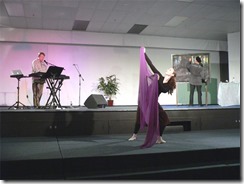 understand why. Music and dance are closely related and church services are full of music. Churches are full of artistic people who want to express their love for the Lord in the ways they know best. And most importantly, David danced before the Lord (II Samuel 6.14). Such things lend themselves easily to the justification of "interpretative movements" and "artistic expressions" in worship.
There is one gigantic problem with such an approach – the church service is not a worship service. In 2015 I wrote six posts totaling 9000 words laying out the case for that last sentence. At the risk of quoting myself let me give you a handful of them. "The stubborn truth is that the church service was not designed or purposed to produce worship. God does not live in a building. You do not need to go to a geographical location to meet with Him." As a matter of fact, there is not a single public worship service discussed, exemplified, commanded, or instructed in the New Testament church age. The only reasons we have entwined the two so closely are tradition and lazy hermeneutics. There are lots of preaching services but zero worship services.
I wrote in that series that misunderstanding this principle produces a wide variety of the mistakes we see in contemporary America's approach to church. Dance is simply one of those mistakes. Yes, David danced before the Lord. But a church service is not about appearing before the Lord. It is not about worship. It is about edification.
As members of New Testament churches we realize that our religion, Christianity, has its roots in the Old Testament. We also realize the Old Testament is not normative for how we conduct church. After all, I seriously doubt your church slaughtered an animal and burned it during the morning service last Sunday. The church was not even imagined in the Old Testament. Yes, men worshipped the Lord then and men worship the Lord now but there is a clear and evident shift in that worship in the New Testament.
 I agree you can show me worshipful dance in the Old Testament. But you cannot in the New Testament. You can ransack it from Matthew 1 to Revelation 22 and you will come up with nothing. But the bulk of my reasoning against involving dance in a church service is not just this argument from silence. It is my carefully considered understanding that the church service is not a worship service.
Church is not about expressing, in an artistic and entertaining way, your worship of the Heavenly Father. It is about pointed preaching that confronts us personally and corporately and in so doing transforms men and women and boys and girls into the image of Jesus Christ. But when your underlying grasp of how and why church is supposed to be done is wrong, and when your spiritual culture rejects separation from the world, then sooner or later I expect dancing to show up in your church services. And when it does you will be wrong.
 Almost a century ago the independent Baptist movement was born. From its beginning it was deeply marked and widely identified with doctrinal orthodoxy and a vigorous practice. Over the last thirty years that vigorous practice has seriously degenerated in a number of rather alarming ways. The results of this degeneration are increasingly seen in two mistakes. The first mistake is the tendency on behalf of the brethren to dig in, to admit nothing publicly, and to attack any who assert that something is wrong. In so doing they are simply exacerbating the problem. The second mistake is to overreact. Some overreact by leaving the independent Baptist movement altogether for contemporary Christianity. Others are attempting to transition to some "new" kind of independent Baptist model. In so doing they are abandoning much that is good and ingesting much that is dangerous.
Schizophrenic seeks to take a balanced approach. On the one hand it boldly shouts, "We're right!" On the other hand it unhesitatingly confesses, "We're wrong." It points to the banners of our strengths and calls on us to lift them high. At the same time, it lifts the rug covering our dirt and calls on us to clean it up. At all times, it seeks to do this with a careful adherence to Scripture and a well-researched eye on the facts all bathed in a spirit of charity.
It is available beginning today in all e-book formats as well as hardback and paperback. See brennanspen.com for more information, some initial reviews, and purchasing information.
…and don’t be shy. When you finish it tell me what you think, agree or disagree. And tell others, especially online. As an independent author it is the only real hope I have to get any traction.
Thank you, my friends.
Music and dancing are closely entwined. This is true in a limited way in Scripture and even more so in popular culture, and especially rock music. For instance, Elvis Presley in his early years never stood still. He moved constantly. As rock exploded in popularity and became synonymous with pop culture in the 50s "American Bandstand" took over television. The 60s brought us "Upbeat", the 70s produced the legendary "Soul Train", and the 80s metamorphosed both music and television at the same time with MTV. The 2000s have only advanced the popularity of dance and music with hugely popular shows such as "So You Think You Can Dance" and "Dancing With the Stars."
This only makes sense. Music is intrinsically rhythmic. So is dance. The two have gone together as long as music has existed. In today's post I want to lay out a brief explanation of what the Bible says about dancing, and give you what I believe that means in practical terms.
Dancing is mentioned twenty seven times in Scripture. It reminds me a bit of wine in that it is mentioned in both positive and negative contexts. Most of the uses are positive. For instance, Let them praise his name in the dance: let them sing praises unto him with the timbrel and harp. (Psalm 149.3) But they are not all positive. For example, we see that the story of the golden calf involved dancing in its demonic worship. And it came to pass, as soon as he came nigh the camp, that he saw the calf, and the dancing: and Moses' anger waxed hot, and he cast the tables out of his hands, and brake them beneath the mount. (Exodus 32.19)
Thus it is that I conclude that not all dancing is right nor is all dancing wrong. In other words, I cannot make a blanket statement in relation to dancing of either commendation or condemnation. But the lack of being able to make a blanket statement of approval or approbation does not mean we are each of us free to do as we will in relation to dancing. It means we must use Scriptural principle and example to inform our decisions.
A moment ago I said that both music and dance are intrinsically rhythmic. They are also both intrinsically emotional. In fact, I define dancing as the physical expression of the emotion your body is experiencing via the music you are hearing. And I think that definition is loosely borne out in Scripture.
When David and Saul returned from a victory against the Philistines the victory parade was a musical expression of the joy of the people. And it came to pass as they came, when David was returned from the slaughter of the Philistine, that the women came out of all the cities of Israel, singing and dancing, to meet king Saul, with tabrets, with joy, and with instruments of musick. (I Samuel 18.6) Likewise we see similar expressions by David and Jeremiah. Thou hast turned for me my mourning into dancing: thou hast put off my sackcloth, and girded me with gladness. (Psalm 30.11) Again I will build thee, and thou shalt be built, O virgin of Israel: thou shalt again be adorned with my tabrets, and shalt go forth in the dances of them that make merry. (Jeremiah 31.4)
This ties in quite clearly with the fact that music is an emotional language. Dance is the logical expression of this rhythmic emotion in a physical space.
…in which we begin to dimly see the danger built into dancing. It is so eminently physical. The problem is that this oh-so physical dancing can easily turn into oh-so physical sexual desire. In point of fact, almost all modern popular dancing is designed largely to provoke or emphasize the body's sexual emotions of lust inherent in immoral music.
 As of this writing "Dancing With the Stars" has produced 374 episodes. I have watched exactly one. That one – which I was watching as part of my research into music – had not been playing for more than ten minutes before I heard the following statement given by a mentor to a trainee during a practice session: "Think of your body as a stick dipped into a pot of boiling sex." Why? Because that is exactly what dancing has become in our day especially as expressed in pop culture – sex.
Such dancing is all kinds of wrong. It is expressing or inculcating the inward emotion of lust in the heart and that violates the Ten Commandments. If you do not believe me just as Jesus. He made it quite clear in the Sermon on the Mount.
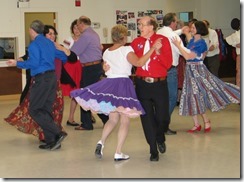 In response someone will surely say to me, "Well, there is nothing wrong with a nice slow dance on a Friday night down at the VFW hall." Oh, really? Are the dances accompanied by immoral music? Then they will not fail to influence you morally in the wrong direction. Are you telling me that you can spend all night hugging other men's wives and at the same time keep your heart pure toward them? If that is your position let me kindly and simply say that you are an idiot. The bar for sin is not just the act of adultery. Sin is in the first thought of it. (Matthew 5.28, Proverbs 24.9) Sin is also just as much in a physical contact that is sexually stimulating even if it comes short of the act of sex. Now concerning the things whereof ye wrote unto me: It is good for a man not to touch a woman. (I Corinthians 7.1) [And, yes, before you fire off that comment I know it does not explicitly say "sin." Go read Genesis 20.6 and James 4.17 and get back to me.]
I can hear it now… "But my dancing doesn't involve touching. We stay apart from each other." Are the dances performed to immoral music? During such dancing do you watch others and get sexually stimulated or do others do so watching you? Are the outfits that you or others around you wear to dance in sexually suggestive and immodest? Then I do not buy your whole but-we-aren't-touching-each-other line.
Others assert that dancing is good exercise. I am sure they are correct. But so is climbing in and out of windows robbing the people in the second floor but that does not make it right. There are lots of ways to get good exercise that do not involve immoral music or have a high potential of provoking impure thoughts.
Having said all of that bear in mind I have also said that not all dancing is wrong. It cannot be for there are clearly good examples of it in the Word of God, especially in a worshipful context. Next week I will address that aspect in greater detail. Stay tuned.
![20160319_133120[7]](https://blogger.googleusercontent.com/img/b/R29vZ2xl/AVvXsEjlo-YhXhDox_cOt953qa6S5KJIH9AhfmXurVs35N_D8d8bLcfIYSNy-Lk-kn6hlH4ITqSU6cAgnsEhxHWAUf2P5q2zj50rlYDqcNcVLojjcgNj9-bRzEigkAfl3g4A-d5ftYjSxMcFnMo/?imgmax=800 "20160319_133120[7]") When you finally come to the place of admitting the truth about your rock music – that it has been opening up the door of the occult in your mind, that it is soaked in sex, advocates rebellion, breeds idolatry, and is physically damaging and addicting – well, then a wise man throws it away. But since he understands that nature abhors a vacuum he does not just throw it away; he replaces it.
When you finally come to the place of admitting the truth about your rock music – that it has been opening up the door of the occult in your mind, that it is soaked in sex, advocates rebellion, breeds idolatry, and is physically damaging and addicting – well, then a wise man throws it away. But since he understands that nature abhors a vacuum he does not just throw it away; he replaces it.
Humanity in general and you (with a high degree of probability) in particular are inherently musical. You enjoy hearing, playing, and singing music. Such a fact leads to this corollary: part of the reason people like rock music is that their flesh delights in it sinfully, but part of the reason is simply because people like music. If all we do is tell them to get rid of the bad music and we do not at the same time teach them how to replace it with good music they will become musically frustrated. The musical part of them will starve, and in hunger reach blindly back for the pig slop in the mire they just left.
To the point then, here are six practical suggestions worth your consideration regarding this matter of replacement.
First, ruthlessly purge the wrong music from your life. Go through your CD collection and pitch anything remotely resembling rock music. Artist by artist, song by song, go through your MP3 player and make liberal use of the delete button. Pull up your Pandora/Spotify channels and erase those that feed the flesh. Zero out the radio presets in your car. Granted, you do not always have control over the televisions and audio systems in your environment, but to the extent you do make regular use of the mute button. If the music is wrong – whether it is an internet stream, a television commercial, the background on a YouTube video, or a radio bumper intro – silence it.
Second, learn how to sing church songs. When it is time to sing at church turn a hymnbook![hymnbook_thumb[2]](https://blogger.googleusercontent.com/img/b/R29vZ2xl/AVvXsEjERER3aAEAA6d82D8rhbeTTh4Z-kkl_Y-Yz7OdVVD8gj01iySwTAiqR9f61wt4iQKdwAobPr_tq28VRMBH9T3zTWvVNzW-61jRnv77Cbgox0qyZz7jR1AlawgThCBj5ZhkbqSEjLyt8yk/?imgmax=800 "hymnbook_thumb[2]") to every page announced, no matter how tedious. If the song is unfamiliar to you just listen on the first verse, try to sing a basic tune on the second verse, and belt it out on the third. Open your mouth, literally. Open it up. Words flow better from an open mouth than they do from lips compressed together. Throw your voice at the notes for a while until you get the hang of it. If you look down your row and everybody is mumbling their way through the songs find a new row. Sit with people who like to sing and their joyful contagion will infect you.
to every page announced, no matter how tedious. If the song is unfamiliar to you just listen on the first verse, try to sing a basic tune on the second verse, and belt it out on the third. Open your mouth, literally. Open it up. Words flow better from an open mouth than they do from lips compressed together. Throw your voice at the notes for a while until you get the hang of it. If you look down your row and everybody is mumbling their way through the songs find a new row. Sit with people who like to sing and their joyful contagion will infect you.
Third, begin to sing or hum or whistle church songs throughout the week. If you learned a good song on Sunday sing it to yourself in the shower Monday morning. Hum it to yourself on the train. Whistle it while you are walking down the hallway to your office. It does not matter if the tune is slightly mismatched or you forget half the words. In this context, what matters is that you are feeding the right kind of music to your musical self.
Fourth, gradually begin to surround yourself with good music. In my youth this involved the laborious process of borrowing someone else's cassette tapes, recording them on reel to reel, and then transferring the resultant mix to 90 minute cassette tapes. Now all you have to do is find a few good internet music stations. For your consideration I offer Faith Music Radio, KNVBC, WBLW, and Canaan Radio as a starting point. Each of these have smart phone apps as well. In the independent Baptist realm most of the best music is produced by Faith Music Missions and various Bible colleges. If you are the type to purchase CD's buy some. If you are the guy who wants to own your digital music then buy some CD's and digitally store them. If all your wants are satisfied by streams then bookmark some of the internet radio stations I have listed above. For that matter, even Pandora has some excellent instrumental hymn channels.
 Fifth, pour the good music into your life like you used to pour in the bad music. Put it on your iPod. Listen to it on the way to work. Play it around the house. Put it on while you are cleaning out the garage. Whatever you do, do not isolate it to only Sunday morning as you drive to church. It is not church music; it is good music.
Sixth, build in those whom you influence an appetite for good music. From the time my children were old enough to sleep in their own rooms they have gone to bed listening to good music. We own hundreds of CD's. My older children own MP3 players and I expect them to be used. Mandy and I play music constantly in the car and around the house of an evening. This is partly because Mandy and I are musically inclined ourselves, but even more so because we want to develop in them a deep taste for the right kind of music and an instant aversion to the wrong kind of music.
Will such things alone ensure that my children grow up to only appreciate and use good music? Of course not. Yes, I seek diligently to develop within them a taste for good music but I must pair that with patient explanation in order to develop in them a clear understanding of the difference between the right and wrong kinds of music. Yet even this is not enough for Jesus must capture their heart. The battle for music is fought in the mind but like all other spiritual battles can only be won in the heart. But all righteous weapons are fair in spiritual warfare and thus I use the right kind of music without apology on all who come within my influence.
As you approach within about twenty feet of my church building you will begin to hear music playing. It plays from above our front doors fourteen hours a day 365 days a year. Hundreds of neighborhood children walk by our building to and from school each day. Each one hears for a few moments the only good music they ever hear – but hear it they do. In our neighborhood we are known as "the church that plays music." If you walk into our auditorium for a church service whether you are sixty minutes early or two minutes late you will hear music. The former is a rotation of a thousand songs on an MP3 player and the latter is enthusiastic congregational singing. The moment the last "Amen" is said at the conclusion of every service the music is turned back up and stays up until the lights go off. If you try to escape the music in the auditorium you will find it following you into the foyer. If you venture into the basement you will hear it there. Someday I will realize my dream and it will even follow you into the bathrooms. =)
Why? Because music is enjoyable, emotional, artistic, and powerful. If your life is filled with the wrong kind ruthlessly eliminate it. But do not stop there, beloved. Fill up the empty space with the right kind of music. It will be sweet to the soul and health to the bones.
No, I do not believe the church has replaced Israel in God's prophetic timetable. I reject such a position for ecclesiological, eschatological, and hermeneutical reasons. In titling today's post "The Doctrine of Replacement" I run the risk of drawing Reformed gadflies to my blog by the gazillions. Boy, won't they be surprised when they discover it is actually about music…
The scriptural foundation for the doctrine of replacement is found first in Matthew 12. This chapter is one of the key hinge pivots in the arc of Jesus' life, and one I have blogged through elsewhere. At one point in the conversation Jesus likens Israel to a painstakingly clean yet empty house that had subsequently been invaded by evil spirits. When the unclean spirit is gone out of a man, he walketh through dry places seeking rest, and findeth none. Then he saith, I will return into my house from whence I came out; and when he is come, he findeth it empty, swept, and garnished. Then goeth he, and taketh with himself seven other spirits more wicked than himself, and they enter in and dwell there: and the last state of that man is worse than the first. Even so shall it be also unto this wicked generation.
Old Testament Israel constantly struggled with idolatry. The earthly cure for that was the Babylonian Captivity. But in the intervening centuries since Israel's return from the Babylonian Captivity though she had not succumbed again to idolatry on a wide scale she had succumbed to something even worse – a rule-obsessed, outwardly focused religion with no love for God or others in her heart. And in that condition she was actually worse off spiritually speaking then when she was idolatrous.
The interpretation involves the theological bankruptcy of rabbinic Judaism but the application is wider than that. I can sum it up in four words: nature abhors a vacuum.
 Just a moment ago I gathered my three children in the kitchen to replicate an experiment I recalled from my high school days. I placed a tablespoon of water into an empty pop can and then placed the can on a stove burner. After boiling the water out of the can I picked it up with tongs and plunged it immediately into a pan filled with cold water. As the can hit the water it instantaneously crumpled to the astonished ooh's and ah's of my children. Why? Because as the steam in the can rose it pushed the air out. Plunging it immediately upside down into cold water condensed the steam back to a liquid creating a vacuum. The external air pressure of 14.7 pounds per square inch did the rest in the blink of an eye. As I said, nature abhors a vacuum.
This is as patently true in the spiritual world as it is in the physical world. If you kick the bad out of your life and do not replace it with good all you have done is make yourself a target for something worse to take its place. In other words, the doctrine of replacement instructs us that a wise man will not only eliminate the wrong influences from his life; he will immediately turn around and replace them with the right influences – because if he does not he will wind up worse off then when he started. For if after they have escaped the pollutions of the world through the knowledge of the Lord and Saviour Jesus Christ, they are again entangled therein, and overcome, the latter end is worse with them than the beginning. (II Peter 2.20)
This is a key principle especially for young people or new converts to learn. For example, they must needs rid themselves of the evil influences in their life such as immoral companions, but once those have been lain aside they must be replaced with new friends, friends that will point the soul in the direction of God and right.
This principle is found repeatedly from one end of the Bible to the other. For instance consider these:
Psalm 34:14 Depart from evil, and do good;…
Psalm 37:27 Depart from evil, and do good;…
Isaiah 1:16-17 Wash you, make you clean; put away the evil of your doings from before mine eyes; cease to do evil; Learn to do well; seek judgment, relieve the oppressed, judge the fatherless, plead for the widow.
Romans 12:9 …Abhor that which is evil; cleave to that which is good.
1Peter 3:11 Let him eschew evil, and do good;…
3John 1:11 Beloved, follow not that which is evil, but that which is good…
In the past four months I have spent nearly 25,000 words on this blog diligently seeking to persuade you to identify and avoid the wrong kind of music. But if that is all you do you will fail. Parent, you are right to throw out your children's rock music. You are right to police their mp3 player and their Spotify stream. But if you do not now lead them to replace that evil music with good music all you have done is create a vacuum – and nature abhors a vacuum. Do not be surprised if your attempt at musical purity collapses. It is guaranteed to do so if you do not learn to practice the doctrine of replacement.
Let's face it. The bulk of my first eleven posts on music have aimed to establish the fact that rock music is a bad thing. I freely admit it. I also freely admit that the vast majority of people do not agree with me, including the majority of American Christianity. They object to many of my characterizations and conclusions. Today's post is dedicated to dealing with a number of the objections that I have received.
1. Classical music at one time had all the same stigmas.
 That is simply not accurate. Yes, classical music has had a number of wicked composers, men of dissolute morals and a reprehensible lifestyle. But that is true of every subset of music because it is true of humanity in general. If I studied it out I'm sure I could find the same thing amongst composers and performers of Celtic music too, for example. There is no one particular style of music that produces moral perfection. What there is, though, is overwhelming evidence that one particular style of music (and its sub-genres) has its roots and its present deep in the occult, and is explicitly paired in historical fact and the popular mind with drugs, sex, and rebellion. That style is not classical; it is rock. Yes, there is a popular book out subtitled "Sex, Drugs, and Classical Music" but is noticeable specifically because it goes against the grain of classical music's generally accepted culture. In other words, the book's very existence is proof that such a position is the exception to the rule, the Amazon.com Prime series not withstanding.
2. You are just reactionary.
A reactionary is one who clings tenaciously to a conservative tradition and is automatically against something because it is new. I am for a music that flows rather than rocks but not because rock music is new and classical music is old. For one thing, at this point, rock music isn't exactly new. For another, I am not reacting against rock music out of some mindlessly robotic attachment to Handel's Messiah, for instance. The truth is that I am not against all new music. Scripture does reference a new song six times in Psalms alone, once in Isaiah, and twice more in Revelation and all of these references are in a positive sense. In point of fact, one of my church members is a wonderfully gifted man who routinely writes new songs and then teaches them to our church. I welcome them wholeheartedly. Rock isn't wrong because it is new; CCM isn't wrong because it is new. Reactionary I am not.
3. I have Christian liberty; I can and do disagree with you about rock music and I'm at peace with it.
You may be telling the truth when you say that but sincerely holding a pro-rock music position under the guise of Christian liberty is zero indication of said position's spirituality. Liberty isn't license. Yes, you have Christian liberty. No, it doesn't mean you can live how you want and enjoy whatever you want. Furthermore, the presence of peace in your heart or the absence of conviction is not any indication of the righteousness of a particular position. There are billions of people in the world living wicked lives without experiencing a shred of conviction. Such an absence of the Holy Spirit's aggravation in your life is a lousy reed to lean upon to establish the scriptural validity of your spiritual position on music. Our heart is deceitful and desperately wicked; using it as a guide is foolhardy at best.
4. Not every rock song or rock star is as bad as you make it sound.
Usually this contention is followed by the lyrics to one particular song which has been used in the life of the listener in a positive way. Alternatively, I am pointed in the direction of Bono and all the charity work U2 does, or some version of this. Such positive influences are a clear indication that my attacks on rock music are simply a broad brushed legalism at best.
If you were physically present at my house in Chicago I would respond by walking you back to the alley that runs behind my house. I guarantee you that within fifty feet of my garage door I can find enough food to eat a meal. And it would all be free and easily available. That's because our alley is lined with trash can after trash can. But just because I can find occasional edible food by digging through my neighbor's trash does not mean I should. Nor does it mean that eating out of the garbage is a good thing instead of a bad thing. Are there occasional good influences in rock music? Yes. And there are occasional good meals to be found in the alley too but it is still better by far to avoid eating out of the trash altogether.
the listener in a positive way. Alternatively, I am pointed in the direction of Bono and all the charity work U2 does, or some version of this. Such positive influences are a clear indication that my attacks on rock music are simply a broad brushed legalism at best.
If you were physically present at my house in Chicago I would respond by walking you back to the alley that runs behind my house. I guarantee you that within fifty feet of my garage door I can find enough food to eat a meal. And it would all be free and easily available. That's because our alley is lined with trash can after trash can. But just because I can find occasional edible food by digging through my neighbor's trash does not mean I should. Nor does it mean that eating out of the garbage is a good thing instead of a bad thing. Are there occasional good influences in rock music? Yes. And there are occasional good meals to be found in the alley too but it is still better by far to avoid eating out of the trash altogether.
5. I've listened to rock music for years and I've never had sex outside of marriage, used drugs, or been possessed by devils.
So is your experience to be the guiding light for your conscience or is it supposed to be the Word of God? Any kind of a Christian at all knows the right answer to that question is the latter not the former. Then don't try to defend your preferential music style with the shield of your own experience. It isn't about experience, positive or negative. The determination for the spiritual validity of my music cannot be my own life; it must be the Word of God.
Furthermore, I contend that while your objection may be factual it is all the more dangerous. If you can permeate your heart and mind with the demonically connected, sex-soaked, rebellion-inducing music of the world and still live morally clean I say you are playing with fire. Can you get away with playing with fire? Perhaps. But Siegfried and Roy had Bengal tigers under control for years until in one minute they suddenly didn't anymore.
6. Your arguments are not convincing.
Let's put the shoe on the other foot. Convince me with your arguments that rock music is acceptable then. I dare say you cannot, can you? So if you can't convince me does that mean you are wrong that rock music is acceptable? No. You may very well be right. In other words, my lack of being convinced by your arguments does not mean that you are wrong.
Now put the shoe back on the first foot. If I cannot convince you that rock music is wrong that lack of being able to convince you does not mean that I am wrong and you are right. It could just mean that you are stubborn, eh? Lack of being convinced is not a valid form of debate. Anyone can be stubborn on either side of this issue. If I can't convince you and you can't convince me that doesn't make either of our positions automatically invalid.
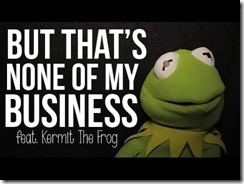 7. My music is not any of your business.
It is God's business, though, mi amigo, it is God's business. You won't answer to me and I won't answer to you but we will both of us answer to God someday. Everything we are and do and allow and love and enjoy and reject is His business.
7. My music is not any of your business.
It is God's business, though, mi amigo, it is God's business. You won't answer to me and I won't answer to you but we will both of us answer to God someday. Everything we are and do and allow and love and enjoy and reject is His business.


 Why does my church choose to use and perform the style of music we do? What is our underlying philosophy? Simply this: our philosophical approach to church music can be summed up in one word – edification.
  church music is different than the above explanation it begins to take your music in some bad directions. Over time, given enough rope, an incorrect philosophy of church music will breed incorrect applications of church music. This, in turn, becomes hardwired into the church's DNA and errors then abound everywhere.


![20160319_133120[7]](https://blogger.googleusercontent.com/img/b/R29vZ2xl/AVvXsEgJvvGNY4kuRxv1Zotd50LkFslyl9OiOQ7hy_HNP5Ia_q4UgVDZmpTQuZBOVNL3i1reONzzKZes4jk1RVU3acUfG-jfBpaydIG-NyUsh39_-TLC687ryYKSkNHmuob2J51vmun4rW1bj0E/s1600-h/20160319_133120%25255B7%25255D%25255B2%25255D.jpg "20160319_133120[7]")
![hymnbook_thumb[2]](https://blogger.googleusercontent.com/img/b/R29vZ2xl/AVvXsEiy8HLGFfqJQZ7rDXol2t_CR38D7Ft0dJxZNOPh1tPR7pNKGq2ofZw3fMuPMgj851_zNyoaA4V2sa4QPi3CULLJUF3UeyocZ9GRPLKwf5deJQ_ianJFtrwjCFe5P_OpuQ6jaLh6TMZ5c20/s1600-h/hymnbook_thumb%25255B2%25255D%25255B2%25255D.jpg "hymnbook_thumb[2]")


